
 Dere Test
All 7 dere types · ツンデレ
Tsundere: Prickly on the Outside, Soft on the Inside
The classic anime archetype who says it's not like they care, then shows up with exactly what you needed.
- On the outside
- Prickly, proud, easily flustered
- On the inside
- Caring, loyal, secretly sentimental
- Shows love by
- Kind acts, then denying them
24 questions · Free results · No sign-up

What is a Tsundere?
Tsundere is the most famous of the dere types, and the word explains itself once you split it in half. Tsun-tsun is a Japanese mimetic phrase for someone who is curt, aloof, or turning away in a huff. Dere-dere describes going soft, lovey, and a little melty around someone you like. Glue them together and you get a character who swings between the two: sharp words and folded arms on the surface, genuine affection underneath. The term spread through visual novel and anime fan communities in the early 2000s and quickly became one of the most recognizable labels in otaku vocabulary.
What makes a tsundere fun to watch is the gap. They clearly care, everyone in the audience can see they care, and yet the moment someone points it out they deny it, blush, and change the subject. The classic beats are instantly familiar: the homemade lunch that was supposedly made by accident, the it's not like I did this for you line, the furious protest after being caught worrying. Older series leaned hard on the harsh half, sometimes to the point of slapstick violence; more recent writing tends to keep the bark and drop the bite, focusing on embarrassment and pride instead.
On this quiz, the tsundere result comes mostly from one dimension: guarded vulnerability. You land here if you care a lot but tend to cover tender moments with a joke, a shrug, or a tough front, often with a bit of playfulness and a fast, visible reaction when you get flustered. It's not about being mean. It's about the distance between what you feel and what you let yourself say out loud.
6 signs of a Tsundere
The denial reflex
Compliments and thank-yous get deflected on instinct. The faster the denial, the more it usually meant to them.
Kindness disguised as coincidence
They happened to have an extra umbrella, an extra snack, or the exact notes you missed. Pure luck, apparently.
Visible fluster
Red ears, crossed arms, a voice that jumps half an octave. Their composure cracks quickly when tenderness shows up unannounced.
Teasing as a love language
Light jabs and playful insults are how they stay close without having to say anything sincere first.
Pride over pleading
Asking for help or admitting they missed someone feels harder than doing the whole thing alone.
The rare soft moment
Every so often the guard drops completely, usually when they think nobody is watching, and that is the scene fans remember.
How a Tsundere shows affection
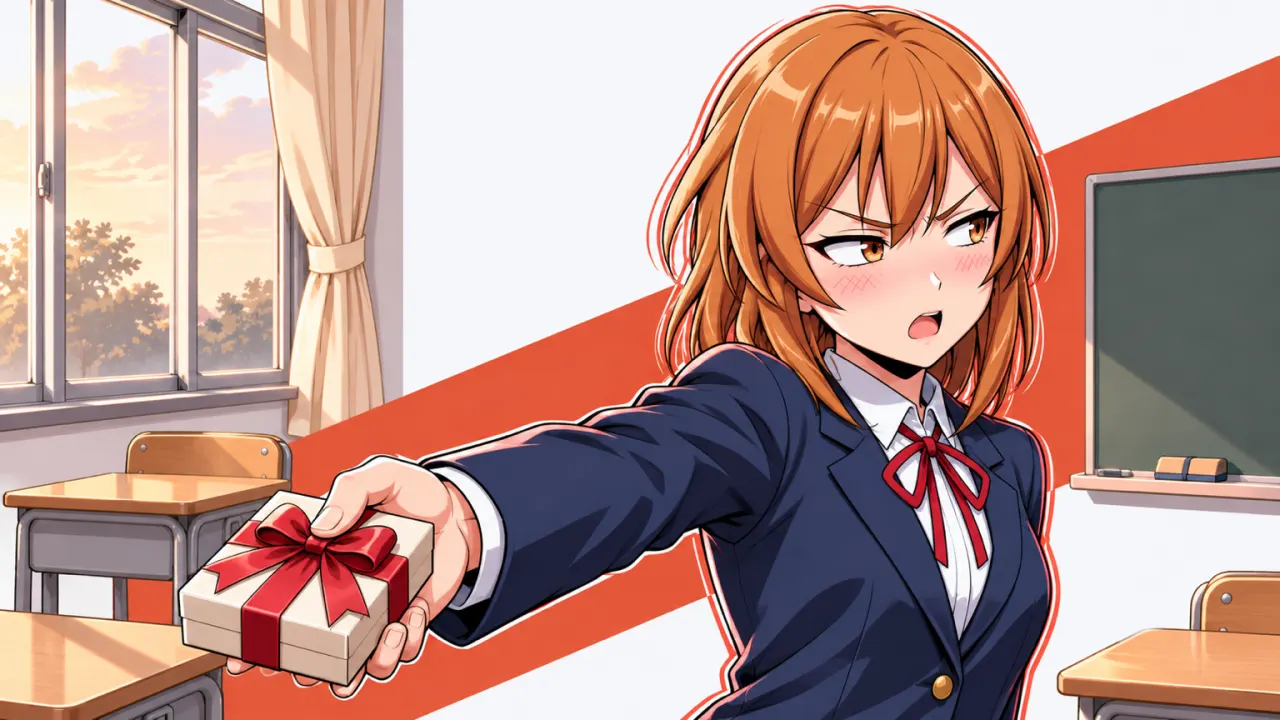
A tsundere in love is mostly a person in a running argument with themselves. Part of them wants to sit closer, text first, and say I missed you; the other part is terrified of looking too eager. The result is a zigzag: a warm gesture, an immediate cover story, a second warm gesture slightly bigger than the first. They tend to show affection through action and proximity long before they put it into words, so the people around them learn to read the deeds rather than the dialogue.
Their care is often very practical and very specific. They remember the café order you mentioned once, fix the thing you complained about, or quietly stay late to help, then insist it was no big deal. Teasing is part of the package too. For a tsundere, being able to bicker comfortably with someone is a sign of trust, not distance, because they only drop their formal politeness with people they feel safe around.
The turning point in most tsundere arcs is the moment they say one honest sentence without a disclaimer attached. It's usually short, awkward, and delivered while looking at the floor, and it lands precisely because it took so much effort. In real-life terms, that is the growth edge too: the warmth is already there, and a little plain speech helps the other person stop guessing.
Lines you might hear
- Tsundere
I only bought two because the second one was on sale. Don't read into it.
- Tsundere
You looked lost, so I walked you over. That's all. Stop smiling like that.
- Tsundere
Fine, I was worried. A little. Happy now? Forget I said anything.
- Tsundere
If you're going to be late again, at least text me. Not because I care. Because it's rude.
Famous Tsundere characters
Taiga Aisaka
Toradora!
The tiny, short-tempered Palmtop Tiger whose fierce front hides a lonely, caring kid is a textbook modern tsundere.
Asuka Langley Soryu
Neon Genesis Evangelion
A proud, combative pilot whose need for recognition and prickly pushback made her one of the defining tsunderes of the 1990s.
Rin Tohsaka
Fate/stay night
A composed, sharp-tongued mage who keeps helping the protagonist while insisting it's purely strategic.
Kurisu Makise
Steins;Gate
A brilliant researcher who meets teasing with indignant comebacks, while her loyalty to the lab shows in what she does.
Chitoge Kirisaki
Nisekoi
Forced into a fake relationship, she bickers constantly with her partner while her real feelings slowly show through.
Easy to confuse with
Tsundere vs Kuudere
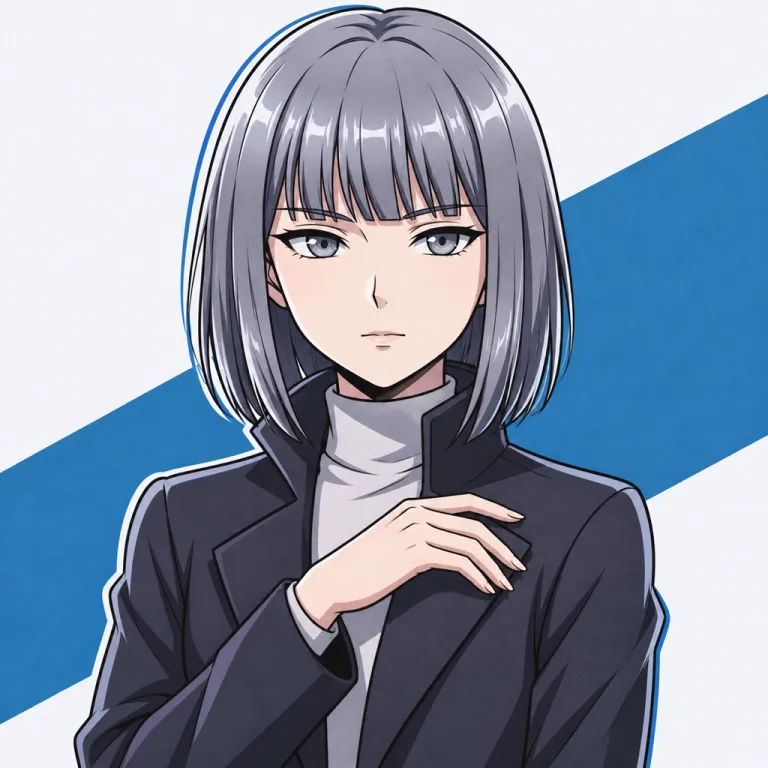
Both can look aloof at first, but the engine is different. A kuudere stays calm and composed on the outside and simply doesn't broadcast much emotion. A tsundere feels a lot, reacts fast, and then scrambles to cover it. If the cool front cracks into a blush and a protest, it's tsundere; if it stays level and the care shows through quiet actions, it's kuudere.

Tsundere vs Himedere
Himederes and tsunderes can both be bossy and proud, which is why they get mixed up. The difference is what the pride protects. A himedere openly enjoys being treated like royalty and wants the attention. A tsundere usually wants the opposite: they're embarrassed by attention and deflect it, and their haughtiness is a shield for tenderness rather than a request to be adored.
Strengths
- Loyal in a quiet, stubborn way: once they're in your corner, they stay there.
- Shows care through concrete, thoughtful actions that are tailored to the person.
- Brings energy, banter, and humor that keep close relationships lively.
Growth edges
- Pair a kind gesture with one plain sentence so the warmth isn't lost in the cover story.
- Notice when teasing stops being shared fun and starts landing as a real sting.
- Let a compliment simply land with a thank-you, instead of arguing it away.
FAQ
What does tsundere mean?
Tsundere combines tsun-tsun, meaning curt or standoffish, with dere-dere, meaning lovey-dovey. It describes a character who acts cold, prickly, or embarrassed on the surface while clearly caring underneath.
Is being a tsundere a red flag?
The anime trope is played for comedy and contrast. In real relationships, being shy about feelings or joking to cover embarrassment is common and harmless; what matters is that teasing stays kind and that care eventually gets said, not just implied. Genuine cruelty or hitting is never part of a healthy version.
Can a guy be a tsundere?
Absolutely. Male tsunderes are everywhere in anime, from proud rivals who refuse to admit they respect the hero to grumpy friends who always show up when it counts. Vegeta from Dragon Ball Z is a frequently cited example. The archetype is about the gap between front and feeling, not gender.
What's the difference between tsundere and kuudere?
A tsundere has strong, visible reactions and hides tenderness behind denial and fluster. A kuudere keeps a calm, even surface and shows care through steady actions. One overheats and covers it up; the other rarely overheats at all.
Are you a Tsundere?
Answer 24 quick questions and see which dere style your answers sit closest to.
Take the free quizExplore the other types




Dere Test is an anime-inspired quiz made for fun and self-reflection. It is not a psychological assessment, and archetypes describe fictional characters, not real people.